
We’ve all been on the receiving end of a “checklist call.” You know the one: a rep runs through Budget, Authority, Need, and Timeline (BANT) like they’re checking off a grocery list. It’s efficient for CRM hygiene, but it’s exhausting for the prospect.
In B2B sales, BANT is a starting point, not the finish line. Opportunities are created through genuine one-to-one engagement that uncovers context, not just qualification criteria.
Prefer a visual breakdown? Catch the quick video summary.
Guiding the Conversation, Not Leading the Witness
The secret to quality discovery and in-depth lead qualification is flexible conversations tailored to the person on the other end of the line. At TeleNet, we focus on guiding the dialogue.
- Guiding is like using a rudder. You keep the conversation on course by using open-ended clarifying phrases based on what the prospect just said.
- Example: “Earlier you mentioned a struggle with [X]. Can you tell me more about how that’s affecting your team’s daily output?”
- Leading (the bad kind) is putting words in their mouth or forcing a binary “yes/no” answer that shuts down dialogue.
- Example: “So you aren’t looking to change providers right now, correct?” (This leads them straight to a “No.”)
The perk of the human touch is the ability to pivot. If a prospect mentions a secondary pain point, a Human-Led approach explores it. A bot or a rigid script ignores it.
| Instead of BANT (Leading/Closed) | Try Discovery (Guiding/Open) |
| “Do you have a budget for this?” | “How is your team currently allocating resources for [Project X]?” |
| “Are you the decision maker?” | “Who else is typically involved in the evaluation process for a change like this?” |
| “When do you plan to buy?” | “If you found the right fit, what does the internal rollout timeline look like?” |
What are the Components of a Human-Led Qualified Lead Profile?
When you engage and guide the conversation, the lead profile transforms. It’s no longer just a confirmed budget and a name; it’s a roadmap for your sales team.
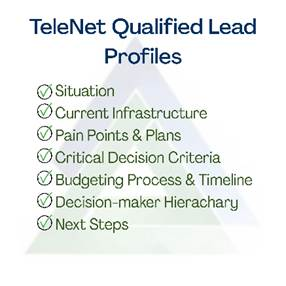
As you can see from our lead profiles, we aren’t looking for a “yes.” We are uncovering:
- The Situation: The “why now” behind the interest.
- Pain Points & Plans: What keeps them up at night and how they intend to fix it.
- Critical Decision Criteria: What actually matters to them (not only what’s on your feature list).
At the end of the day, B2B buying is still a human process. When we prioritize guiding a conversation over leading a prospect to a predetermined answer, we respect their time and uncover the real challenges they face.
Key Takeaways: Moving Beyond BANT
- BANT is a baseline, not a strategy: While Budget, Authority, Need, and Timeline provide a framework, relying solely on these basline qualifiers results in rigid, interrogation-style conversations that limit discovery and engagement.
- Human-touch discovery: While AI tools may be leveraged to create more efficiency for LDRs and SDRs, it’s the human-led approach that allows for a flexible conversation where the engagement is tailored to the prospect’s specific responses rather than a fixed script.
- The “Guiding vs. Leading” Framework: Effective 1:1 engagement focuses on “guiding” the prospect using open-ended questions to uncover pain points, rather than “leading” them toward a biased or binary answer.
- Depth of lead intelligence: True qualified lead profiles include high-level details such as current infrastructure, critical decision criteria, and the specific “why now” behind a project.